
Google Ads is changing the way advertisers access the Google Display Network. Starting in Q3 of 2026, Google is moving Display campaigns into Demand Gen, bringing Google Display Network inventory together with visual channels including YouTube, Discover, Gmail, and Maps. For multifamily marketers, this isn't simply a change to where you build a campaign, it’s a shift in how visual advertising can be planned, managed, and measured.
Google began a phased rollout of its migration tool in June 2026, allowing eligible advertisers to move existing Display campaigns into Demand Gen while carrying over performance history from the previous campaign. Google says this history can help reduce the learning period compared with starting a new campaign from scratch.
What’s Changing?
Google Display campaigns aren't going away. Instead, Google is bringing Google Display Network inventory into Demand Gen.
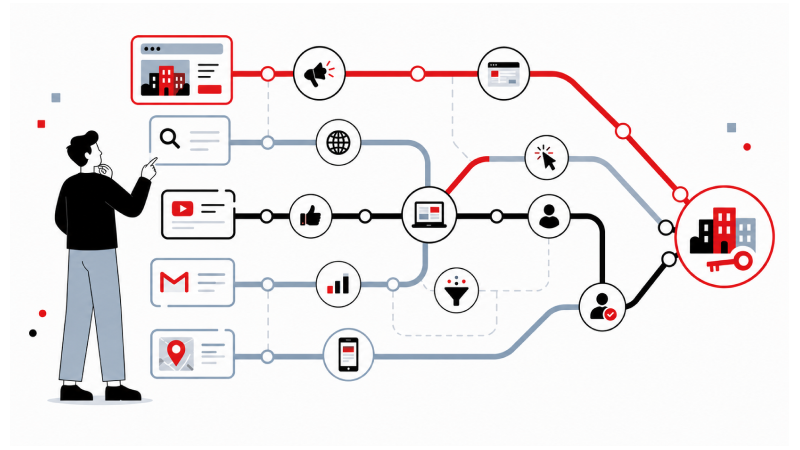
Historically, Display campaigns provided access to the Google Display Network, along with inventory across places such as YouTube and Gmail. Under the new Demand Gen structure, marketers can access GDN alongside YouTube, Discover, Gmail, and Maps within a single campaign type. That creates a broader opportunity for marketers to reach audiences across Google's visual ecosystem. It also gives advertisers access to additional creative formats, audience capabilities, and reporting options.
For multifamily brands, that could mean more opportunities to stay in front of prospective renters throughout a longer decision-making journey - from initial awareness to consideration and ultimately conversion.
Why This Matters for Multifamily Marketing
Apartment searches rarely happen in a single interaction. A prospective renter might first discover a community through a visual ad, visit the website several days later, search for the property by name, return through a remarketing campaign, and eventually convert into a lead or tour. That makes awareness and demand generation an important part of the multifamily marketing mix. Google's move toward Demand Gen reflects this broader approach to advertising. Rather than treating Display as an isolated channel, advertisers can now use a campaign structure designed to reach audiences across multiple visual surfaces.
For multifamily marketers, this creates an opportunity to think beyond questions like: "How many leads did Display generate?"
Instead, consider: "How is this campaign contributing to the renter journey?"
That distinction matters when you're building a marketing budget. A channel designed primarily to create awareness shouldn't necessarily be judged by the same expectations as a high-intent Search campaign. Likewise, a campaign that influences a renter early in their journey may not receive the last click, even though it contributed to the eventual lease.
.png)
More Inventory Means More Strategic Decisions
One of the biggest changes with Demand Gen is the ability to expand beyond traditional Display inventory. Google says Demand Gen can include the Google Display Network, YouTube, Gmail, Discover, and Maps, giving advertisers more ways to reach audiences through visual advertising. That expanded reach can be valuable for multifamily marketers, but it also creates more variables to consider.
- Where are your ads performing best?
- Which audiences are actually engaging?
- Which creative formats are generating meaningful traffic?
- Are additional impressions creating incremental value, or simply increasing spend?
- And most importantly, are those interactions contributing to qualified leasing activity?
Those are not questions that can be answered by looking at impressions or clicks alone.
Google itself recommends monitoring migrated campaigns because performance can fluctuate during the first several days after migration. For marketers, that means migration shouldn't be treated as a "set it and forget it" exercise; it should be treated as an opportunity to establish a new performance baseline.
Creative Strategy Matters More Than Ever
Demand Gen also expands the creative possibilities available to advertisers. Migrated campaigns can retain responsive and uploaded display formats, while Demand Gen adds options such as carousel ads, additional video formats, image enhancements, image-to-video capabilities, and generative creative tools. For multifamily brands, that creates room to test different ways of telling a property's story. Instead of relying exclusively on static property imagery, marketers can experiment with:
- Lifestyle-focused creative
- Short-form video
- Amenity-focused messaging
- Neighborhood and location content
- Resident experiences
- Seasonal promotions
- Floor plan and availability messaging
- Brand-focused creative designed to build familiarity
The goal should be to understand which messages resonate with specific audiences and where those messages fit within the renter journey. A beautiful amenity image may be excellent for awareness. A floor plan or special offer may be more effective further down the funnel.
The strategy should determine the creative - not the other way around.
Don't Just Migrate Campaigns - Revisit the Strategy.
The Google Display-to-Demand Gen transition gives multifamily marketers a natural opportunity to take a step back. Instead of simply moving campaigns into a new campaign type, use the transition as a reason to evaluate:
- Which audiences you're targeting
- How your creative is performing
- Where your budget is being allocated
- Which campaigns are generating meaningful results
- How awareness activity supports conversion
- Whether your current KPIs reflect actual business goals
- How your paid media performance connects to leasing outcomes
Google's migration tool is designed to transfer settings and learning from eligible Display campaigns, but Google also notes that some features will change or become unavailable after migration. For example, manual CPC bidding, certain bid adjustments, and some campaign-level exclusions are not supported in Demand Gen. That makes it even more important to review campaigns rather than assuming everything will operate exactly as it did before.
The Bigger Picture
The shift from Display to Demand Gen is part of a larger evolution in digital advertising: platforms are becoming more automated, more interconnected, and increasingly focused on using machine learning to determine where and when ads can create value. For multifamily marketers, the response shouldn't be to chase every new feature. It should be to build a strategy flexible enough to adapt to them.