
As another year of multifamily marketing begins to move into the later part of the year, planning for the future becomes more important than ever. Budget conversations are underway, marketing strategies are being refined, and leadership teams are looking ahead to the opportunities and challenges that 2027 may bring.
The question many marketers face isn't simply, "How much should we spend?" It's "Where should we invest to generate the strongest leasing results?"
The good news is that you don't have to rely on guesswork. Every campaign you've launched, every lease you've generated, and every marketing report you've analyzed provides valuable insight into what's likely to happen next.
When you know how to identify meaningful trends, your marketing data becomes more than a performance report - it becomes a forecasting tool.
Why Forecasting Matters in Multifamily Marketing
The multifamily industry changes quickly. Market conditions shift, renter behavior evolves, advertising costs fluctuate, and new technologies continue to reshape how prospects search for apartments.
Without forecasting, marketing decisions often become reactive.
Instead of anticipating changes, teams find themselves responding after performance has already declined.
Strategic forecasting allows marketers to:
- Build realistic marketing budgets
- Set achievable leasing goals
- Prepare for seasonal fluctuations
- Identify potential risks before they become problems
- Allocate resources where they'll have the greatest impact
While no forecast can predict the future with complete certainty, historical performance provides a strong foundation for making informed decisions.
Your Historical Data Is Your Greatest Planning Tool
One of the biggest mistakes organizations make is treating reports as something to review once a month before filing them away.
In reality, your historical marketing data tells the story of how prospects discover your communities, what influences leasing decisions, and which marketing investments consistently deliver results.
Questions worth asking include:
- Which marketing channels consistently produce qualified leads?
- Which campaigns generate the highest lease conversion rates?
- When does leasing activity naturally increase or slow down?
- How does advertising spend impact occupancy over time?
- Which properties consistently outperform expectations?
The answers reveal patterns that help shape future strategy. Rather than guessing where next year's leases will come from, you can make decisions backed by real performance data.
Look Beyond Individual Metrics
Forecasting isn't about focusing on one KPI. The strongest forecasts combine multiple performance indicators to create a more complete picture of marketing effectiveness.
Some of the most valuable metrics include:
- Cost Per Lease: Understanding your true acquisition cost helps determine whether marketing investments are sustainable.
- Lead-to-Lease Conversion Rate: Knowing how efficiently leads become residents provides valuable context when forecasting future leasing volume.
- Source Performance: Not all marketing channels contribute equally. Identifying your highest-performing source groups helps prioritize future investment.
- Occupancy Trends: Marketing performance should always be viewed alongside occupancy goals and leasing velocity.
- Seasonal Performance: Historical seasonality often reveals recurring opportunities and slow periods that should influence campaign planning.
Together, these metrics provide a stronger foundation than any single number alone.
Identify Trends, Not Just Results
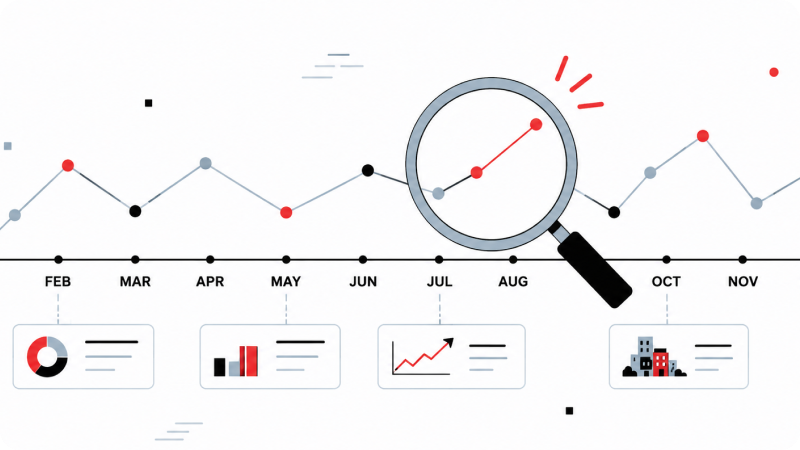
One strong month doesn't necessarily indicate long-term success. Instead of focusing solely on monthly reports, compare performance over longer periods.
Look for questions like:
- Are conversion rates steadily improving?
- Has paid search become more expensive over time?
- Which campaigns consistently outperform expectations?
- Are certain communities responding differently to similar strategies?
- Which channels continue producing qualified traffic month after month?
Trend analysis helps separate temporary fluctuations from meaningful performance patterns. Those long-term patterns are what make forecasting more reliable.
Attribution Makes Forecasting More Accurate
Forecasting depends on confidence in your data. If you're uncertain where leases are actually coming from, predicting future performance becomes much more difficult.
That's why attribution matters.
Connecting marketing activity to actual leasing outcomes helps marketers understand:
- Which channels influence leasing decisions
- Which campaigns deserve additional investment
- Which marketing efforts consistently underperform
- How budget changes impact lease generation
With more accurate attribution, forecasting shifts from educated guessing to informed planning.
Turn Insights Into Action
The purpose of forecasting isn't simply to predict what might happen. It's to make better decisions today. When marketers understand performance trends, they can confidently:
- Increase investment in high-performing campaigns
- Reduce spend on underperforming channels
- Plan seasonal promotions earlier
- Set realistic leasing expectations
- Build marketing budgets around measurable outcomes
Forecasting transforms marketing from a reactive function into a strategic business driver.
Looking Ahead to 2027
Every successful marketing strategy begins with understanding where you've been. The campaigns you launched this year, the channels that generated leases, and the trends hidden within your reporting all provide valuable guidance for what's next.
Rather than starting from scratch each budget season, use your historical data to build a smarter, more informed marketing plan.
At Dyverse, we believe better decisions begin with better visibility. By connecting your marketing data, attribution insights, and performance reporting, you gain the clarity needed to forecast with confidence - not just for next quarter, but for the year ahead.
The future may never be perfectly predictable, but with the right data, it can be far more strategic.