Request Demo
Sign-up for a demo to see how our solutions can help you improve website conversion rate, generate more leases and simplify reporting.

 Back
Back Copy link
 Share on LinkedIn
 Share on X
 Share on Facebook
Setting the Stage for 2026: How Multifamily Marketers Can Build Stronger Data-Driven Strategies for
the Year Ahead
As 2025 comes to a close, multifamily marketers are entering one of the most critical phases of the year: planning for what comes next. With ongoing pressure to improve ROI, evolving renter expectations, and rapid changes in marketing technology, 2026 will demand clear focus, stronger attribution, and strategic alignment between marketing and business goals.
This month, we’re shifting from reflection to forward planning - making sure that the lessons learned this year become meaningful advancements next year. Below, we discuss the key steps marketers can take to build a high-performing strategy for 2026, which is one grounded in data, aligned with organizational priorities, and responsive to industry trends.
Why Strategic Goal-Setting Matters More Going Into 2026
Multifamily demand patterns are shifting, leasing seasonality continues to evolve, and many markets face stronger competition with new supply entering the pipeline. Meanwhile, renters are engaging with more digital touchpoints than ever before, and expecting personalized, friction-free experiences.
In this environment, marketing plans built on gut feeling or outdated patterns risk overspending and underperforming. Instead, 2026 strategies must focus on:
- Measurable performance
- Attribution-Driven Budgeting
- Renter Experience Improvements
- Technology That Scales Impact
- Long-Term ROI
When marketing goals connect directly to business outcomes (occupancy, cost efficiency, retention, revenue), results follow.
Step 1: Start with the Right KPIs, and Let the Data Guide You
Before goals are set, performance must be clearly understood. That begins with identifying the metrics that mattered most in 2025:
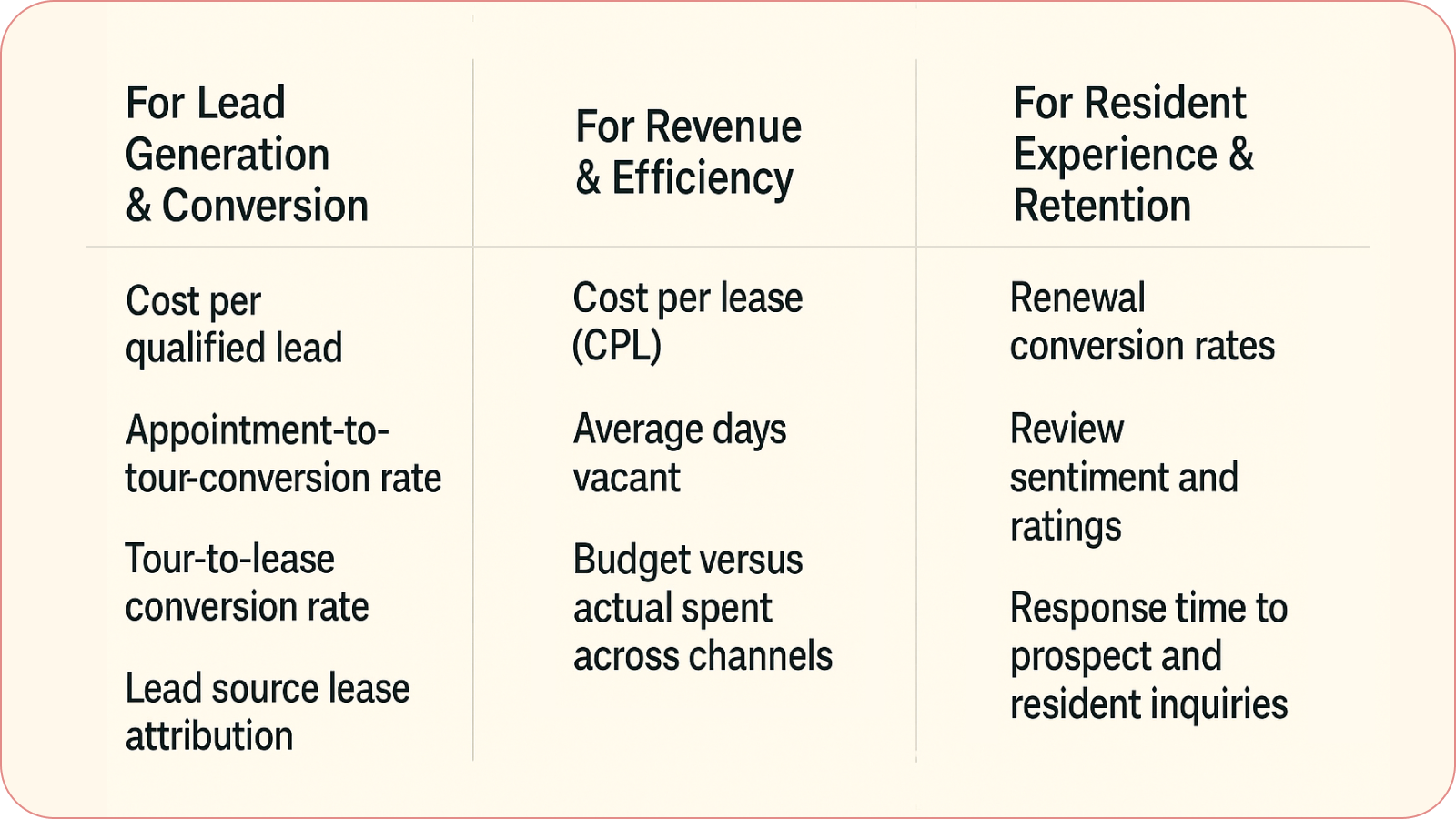
These are the metrics that tell the truth. Not clicks, not impressions. Not “vanity” metrics that look good on the surface.
At Dyverse, our tools help marketers see what truly influenced a signed lease, making it easier to identify the channels and message strategies that deserve to scale in 2026.
Step 2: Define Business-Aligned Marketing Goals
Marketing exists to support clear business objectives. So the right question when setting 2026 goals isn’t “How many more leads can we get?”. It is “Which marketing levers can most efficiently drive occupancy and NOI growth?”
That alignment may look like:
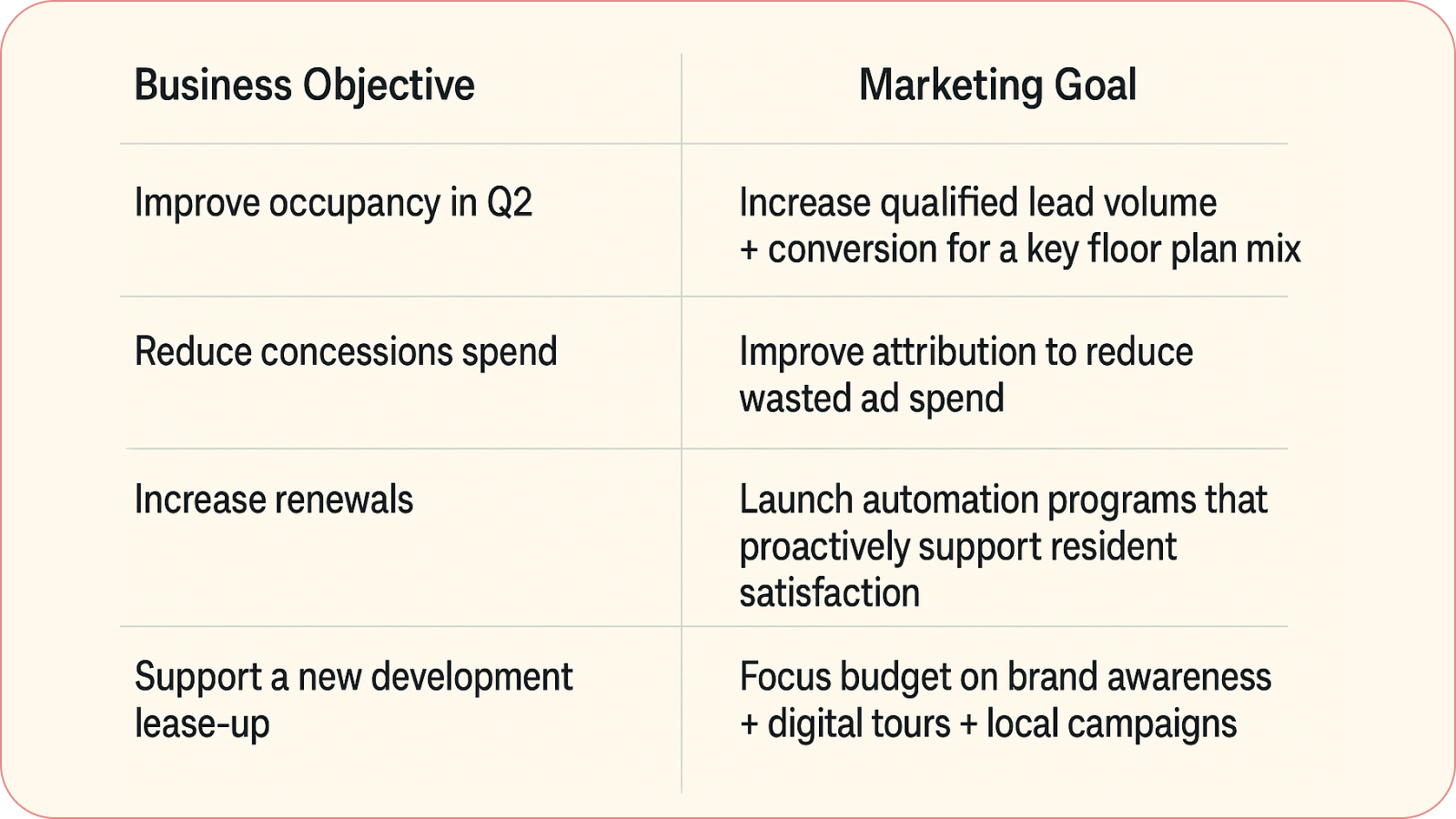
When goals map directly to revenue and retention, marketing isn’t just filling the funnel, it becomes a strategic growth driver.
Step 3: Identify Opportunities Based on Performance Gaps
2026 planning should address what slowed performance in 2025, and what accelerated it.
Ask:
- Which audiences were hardest to convert, and why?
- Did certain floor plans struggle longer?
- Which markets or neighborhoods shifted faster than expected?
- Where did costs rise without improved results?
- Where did performance improve despite market challenges?
Every challenge becomes an opportunity:
- Slow conversions = invest in improved onsite follow-up + high-intent remarketing
- Weak attribution clarity = implement data automation & analytics tools
- Lead quality issues = refine audience targeting + messaging alignment
- Retention drop-off = improve service transparency + renewal communication
Strategy grows from insight. Insight grows from data.
Properties that demonstrate care and not just convenience will stand out.
Step 4: Align With 2026 Trends - Meet the Renter Where They’re Going
AI & Automation
- Set goals around operational efficiency, such as reducing manual work or improving response times.
Sustainability Messaging & Transparency
- Include clear communication about cost-saving green features and community initiatives.
Social Responsibility & Community Building
- Build goals around engagement metrics - event participation, community content, online sentiment.
Personalized Digital Experiences
- Create goals tied to website engagement, dynamic content performance, and CRM-driven segmentation.
Goals should not only reflect what happened last year, but what will matter most next year.
Step 5: Build Budgets Backed by Attribution - Not Guesswork
Budget planning becomes far easier when you know:
- Which channels drove leases
- What sources inflated CPL
- Where leads stalled in the journey
- How spend correlated with occupancy trends
With advanced analytics and attribution, marketing teams can shift funds away from low-value channels, double down on high-intent performance, test new ideas without risking core outcomes, and forecast seasonal needs with better accuracy
A smarter budget = smarter results.
Step 6: Make Room for Experimentation and Agility

The best marketers don’t just react to the market, they learn from it in real time.
2026 strategies should include A/B testing for messaging and landing pages, pilot campaigns in emerging channels, creative refresh cycles tied to performance dips, and quarterly reviews that allow for fast adjustments.
Progress beats perfection - especially in markets where consumer behavior changes quickly.
Step 7: Turn the Plan Into Actionable, Measurable Execution
Once goals are defined, turn each into a detailed plan:
- Specific milestone targets
- Timeline for execution and evaluation
- Clear owner responsible
- Dashboard visibility for performance monitoring
The most successful teams share one characteristic: Everyone knows what success looks like, and how they’ll measure it.
Final Thoughts: Make 2026 the Year of Intentional Marketing
The year ahead will reward marketers who are:
- Analytical - not anecdotal
- Curious - not complacent
- Strategic - not reactive
By grounding your plan in what worked, learning from what didn’t, and aligning goals with where the industry is heading, you’ll be positioned for a high-performance year ahead.
At Dyverse, we’re here to help multifamily marketers set smarter strategies supported by clear data, modern attribution, and insights that drive better results.
Let’s make 2026 your strongest year yet!

More from Dyverse
Automation & AI in Multifamily Marketing: Transforming Lead Engagement and Conversion
The multifamily marketing landscape is undergoing a massive change, with automation and artificial intelligence (AI) playing a critical...

Why May and every other month is the ideal time to be kind to yourself
May is mental health awareness month, which provides a great opportunity to refocus our priorities on our mental and physical health...

Breaking down the differences between Geofencing vs Geotargeting
Over the years, we have commonly heard clients, coworkers, and industry peers get confused about the differences between...
Want more?
Subscribe to get the latest updates on multifamily marketing, technology, and more.

Keep up with us!
For the latest updates be sure to connect with us on our social platforms.


Let's start a conversation
Schedule a demo to discuss how Dyverse can help you boost your leasing performance.


Suite 1000
Orlando, FL 32801
(866) 832-1507


