Request Demo
Sign-up for a demo to see how our solutions can help you improve website conversion rate, generate more leases and simplify reporting.

 Back
Back Copy link
 Share on LinkedIn
 Share on X
 Share on Facebook
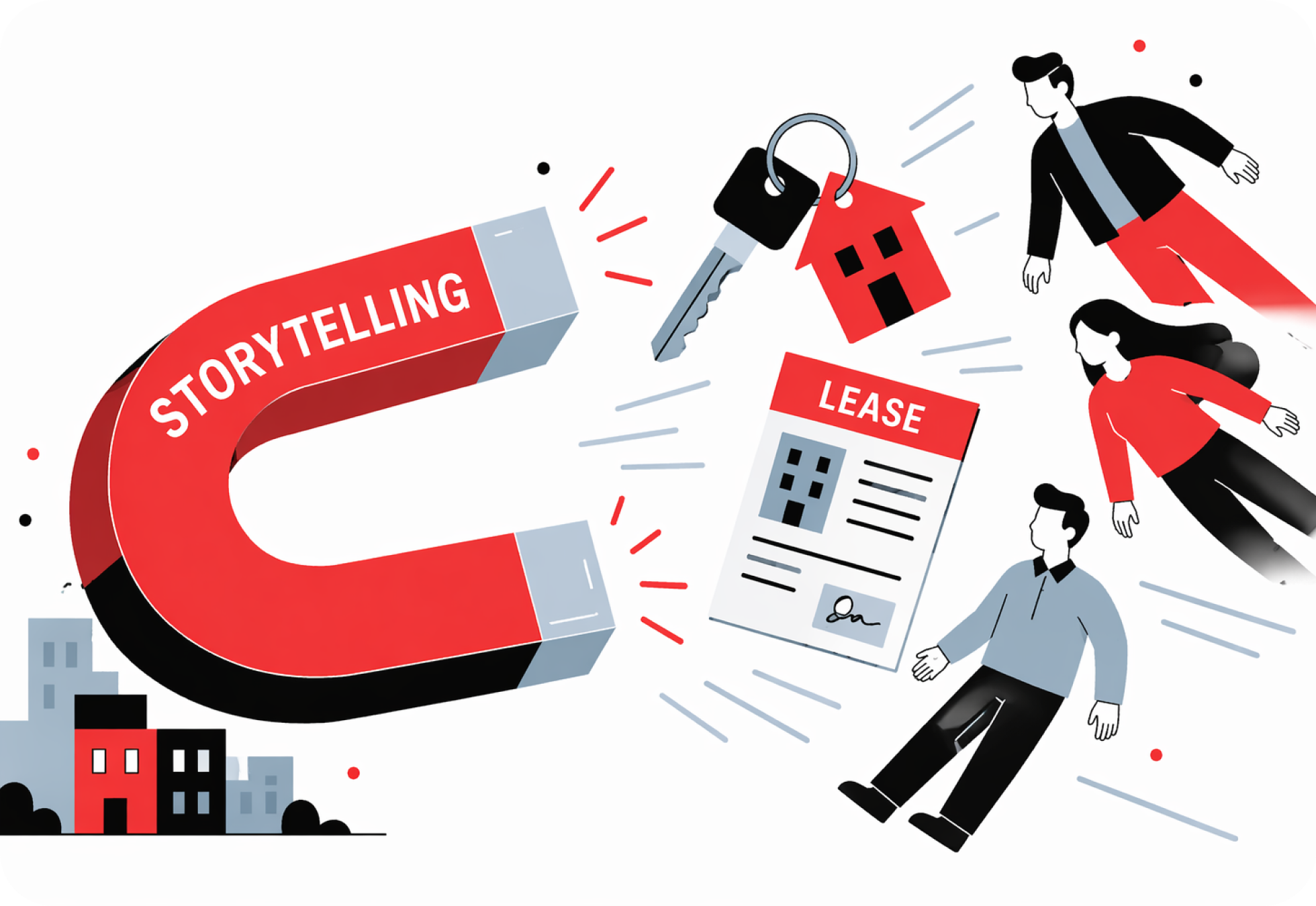
In multifamily marketing, facts are everywhere. Floor plans, pricing, amenities, square footage; every property has them, and every competitor is promoting them. But in a crowded market where options often look similar on paper, facts alone aren’t what drive decisions. Stories do.
Storytelling has become one of the most powerful tools in modern marketing because it transforms information into something meaningful. It helps prospects move beyond comparing features and start imagining a lifestyle - one that feels personal, relevant, and worth acting on.
As multifamily marketers focus on turning attention into action, storytelling plays a critical role in bridging that gap.
Why Storytelling Matters More Than Ever
Today’s renters aren’t just searching for a place to live, they’re searching for a place that fits their lifestyle. At the same time, digital channels are more saturated than ever. Prospects scroll quickly, skim content, and make decisions in seconds. To stand out, marketing needs to do more than inform. It needs to connect.
Storytelling works because it:
- Creates emotional engagement
- Makes messaging more memorable
- Differentiates similar properties
- Builds trust and authenticity
Instead of simply presenting what a property offers, storytelling shows what life could look like there. The shift from features to experience, is what drives deeper engagement and ultimately, conversion.
Moving Beyond Features to Experiences
Most multifamily marketing starts with a list of amenities: resort-style pools, modern fitness centers, pet-friendly spaces, and smart-home technology.
While these features are important, they don’t always answer the question prospects are really asking: “What would it feel like to live here?”
Storytelling helps answer that question.
For example, instead of highlighting a “co-working space,” a story might focus on a remote worker starting their day with coffee, taking meetings in a quiet workspace, and stepping outside for a midday reset.
Instead of listing “walkable location,” storytelling might showcase a resident grabbing dinner at a nearby restaurant or meeting friends just steps from home.
These narratives turn static features into dynamic experiences, and that’s what resonates with your audience.
Understanding Your Audience’s Story
Effective storytelling starts with understanding your audience.
Different renter segments have different priorities, routines, and motivations. A young professional may value convenience and social opportunities, while a family may prioritize space, safety, and nearby schools.
To create stories that connect, marketers need to identify:
- Who they’re trying to reach
- What matters most to that audience
- What challenges or needs they have
- What lifestyle they aspire to
When you understand your audience’s perspective, you can craft stories that feel relevant rather than generic.
The goal isn’t to tell your property’s story, it’s to tell their story, with your community as the setting.
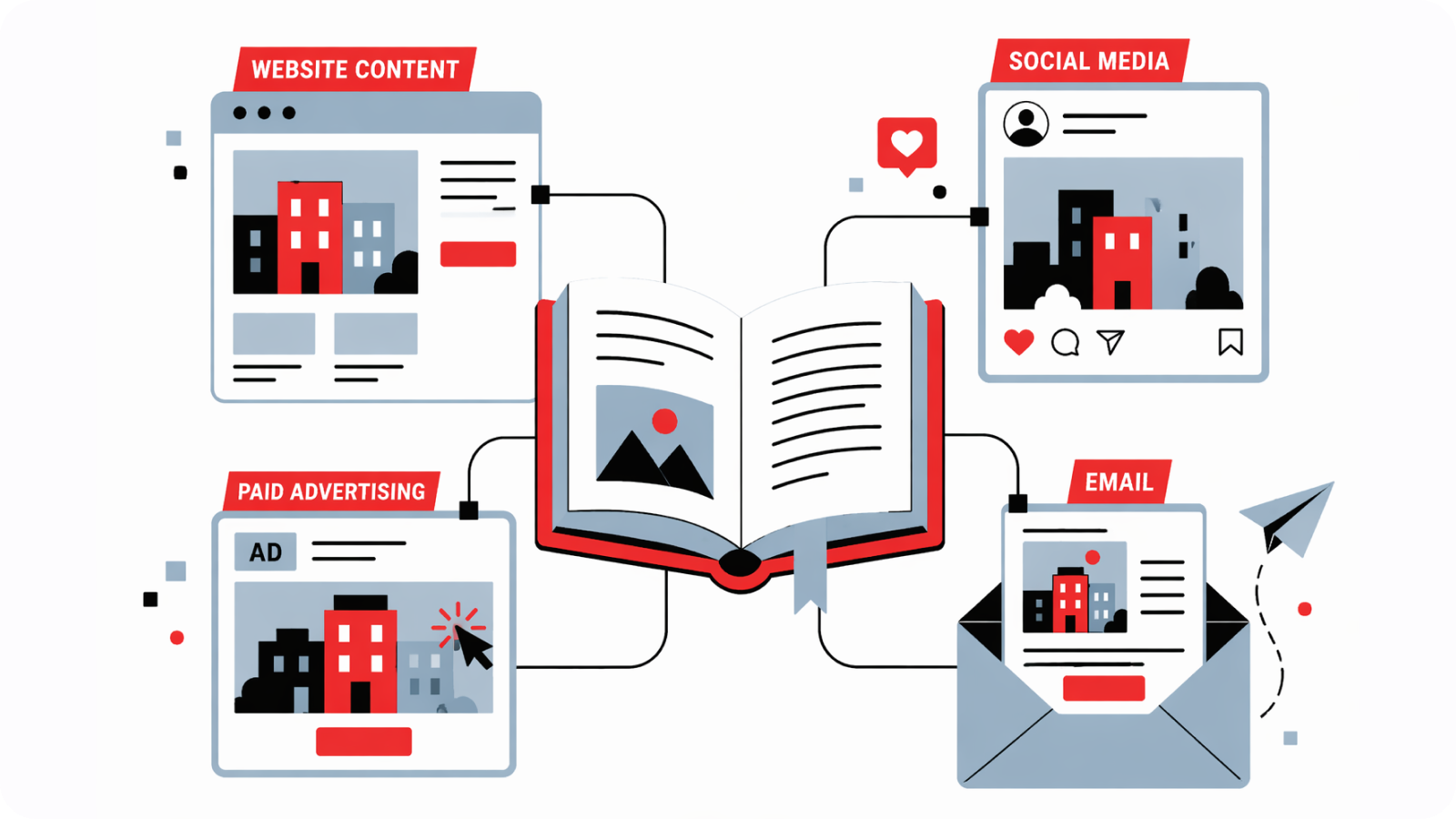
Bringing Stories to Life Across Channels
Storytelling isn’t limited to long-form content. It can, and should show up across every marketing channel.
Website Content:
Your website is often where prospects go to learn more, making it a key place for storytelling.
Instead of relying solely on static descriptions, incorporate narrative-driven copy that highlights lifestyle benefits, community atmosphere, and everyday moments.
Social Media:
Social platforms are ideal for storytelling through visuals and short-form content.
Day-in-the-life posts, resident spotlights, behind-the-scenes content, and neighborhood highlights all help create a more human, relatable brand presence.
Paid Advertising:
Even within limited ad space, storytelling can influence performance.
A single image, headline, or short video can convey a lifestyle moment that resonates with a specific audience segment.
Email and Lead Nurturing:
Storytelling is especially effective in nurturing leads over time.
Instead of sending purely transactional emails, consider content that highlights community events, resident experiences, or local partnerships.
This keeps prospects engaged and builds familiarity before they take the next step.
Authenticity Builds Trust
One of the most important aspects of storytelling is authenticity.
Prospects can quickly recognize when messaging feels overly polished or disconnected from reality. Stories that feel genuine, even if they’re simple are often more effective than highly produced but impersonal content.
User-generated content, resident testimonials, and real-life experiences can strengthen authenticity and build trust.
The goal isn’t perfection. It’s relatability.
Connecting Storytelling to Conversion
While storytelling is often associated with brand building, it also plays a direct role in conversion.
When prospects feel emotionally connected to a community, they are more likely to:
- Spend more time exploring the website
- Engage with content across channels
- Schedule tours
- Move forward in the leasing process
Storytelling creates a sense of familiarity before the first interaction, making the decision process feel easier and more intuitive.
However, storytelling alone isn’t enough. It must be paired with clear calls-to-action and a seamless user experience.
A compelling story should always lead to a clear next step.

Measuring the Impact of Storytelling
Unlike traditional performance metrics, storytelling impact isn’t always immediate, but it is measurable over time.
Marketers can evaluate effectiveness by tracking:
- Engagement rates on social and content
- Time on page for website content
- Click-through rates on campaigns
- Lead quality and conversion rates
When storytelling resonates, these metrics often improve, not just in volume, but in quality.
Higher engagement typically leads to more qualified prospects and stronger conversion performance.
Making Storytelling Part of Your Strategy
Storytelling shouldn’t be treated as a one-off campaign tactic. It should be embedded into your overall marketing strategy.
Start by identifying key themes that align with your brand and audience. From there, look for opportunities to consistently incorporate storytelling into content, campaigns, and communication.
Even small shifts such as rewriting property descriptions or rethinking ad messaging can make a meaningful difference.
Turning Content Into Connection
In a competitive multifamily market, content alone isn’t enough. Connection is what drives results.
Storytelling transforms marketing from transactional to meaningful. It helps prospects see themselves in your community, builds trust before the first interaction, and creates a stronger emotional foundation for decision-making.
As marketers continue focusing on engagement and conversion, storytelling will remain a key differentiator.
Because at the end of the day, renters aren’t just choosing a floor plan. They’re choosing a place where their story continues.

More from Dyverse
Dyverse Achieves SOC 2 Type II Compliance, Reinforcing Commitment to Data Security, Trust, and ClientSuccess
Dyverse, a leading provider of marketing technology solutions for the multifamily housing industry,today announced it has successfully achieved System and...
Why Search Queries Are Your Most Important KPI for Google Ads in the Multifamily Industry
In the multifamily industry, Google Ads search campaigns can be a powerful tool to drive targeted traffic and generate leads...
Breaking Down the Differences Between Google’s Demand Generation and Performance Max Campaign Types
With the advancement of search engine technology, Google has continued revolutionizing the digital advertising industry by introducing new products such as Demand...
Want more?
Subscribe to get the latest updates on multifamily marketing, technology, and more.

Keep up with us!
For the latest updates be sure to connect with us on our social platforms.


Let's start a conversation
Schedule a demo to discuss how Dyverse can help you boost your leasing performance.


Suite 1000
Orlando, FL 32801
(866) 832-1507


