Definition:
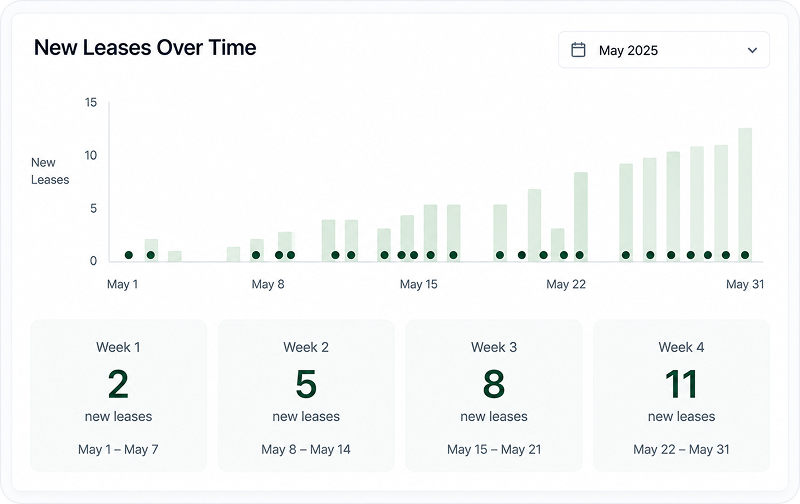
Leasing velocity refers to the pace at which a multifamily community is securing leases over a given period of time. It can be evaluated by tracking the number of leases signed weekly or monthly and comparing that activity with available inventory and occupancy goals. Unlike absorption rate, which focuses on how quickly available inventory is being absorbed, leasing velocity focuses more directly on the pace of leasing activity at the property. It is particularly useful during lease-up but can also be monitored at stabilized communities to identify changes in leasing momentum.
Why it matters:
Leasing velocity helps teams understand whether a community is generating leases at the pace needed to maintain or improve occupancy. A slowdown in leasing velocity can signal that teams should take a closer look at factors such as prospect traffic, pricing, concessions, availability, or conversion performance. During lease-up, it can also help teams evaluate whether the property is progressing toward stabilization as expected. Tracking leasing velocity alongside absorption rate, exposure rate, and conversion metrics gives teams a more complete view of how effectively renter demand is translating into signed leases.