Request Demo
Sign-up for a demo to see how our solutions can help you improve website conversion rate, generate more leases and simplify reporting.

 Back
Back Copy link
 Share on LinkedIn
 Share on X
 Share on Facebook
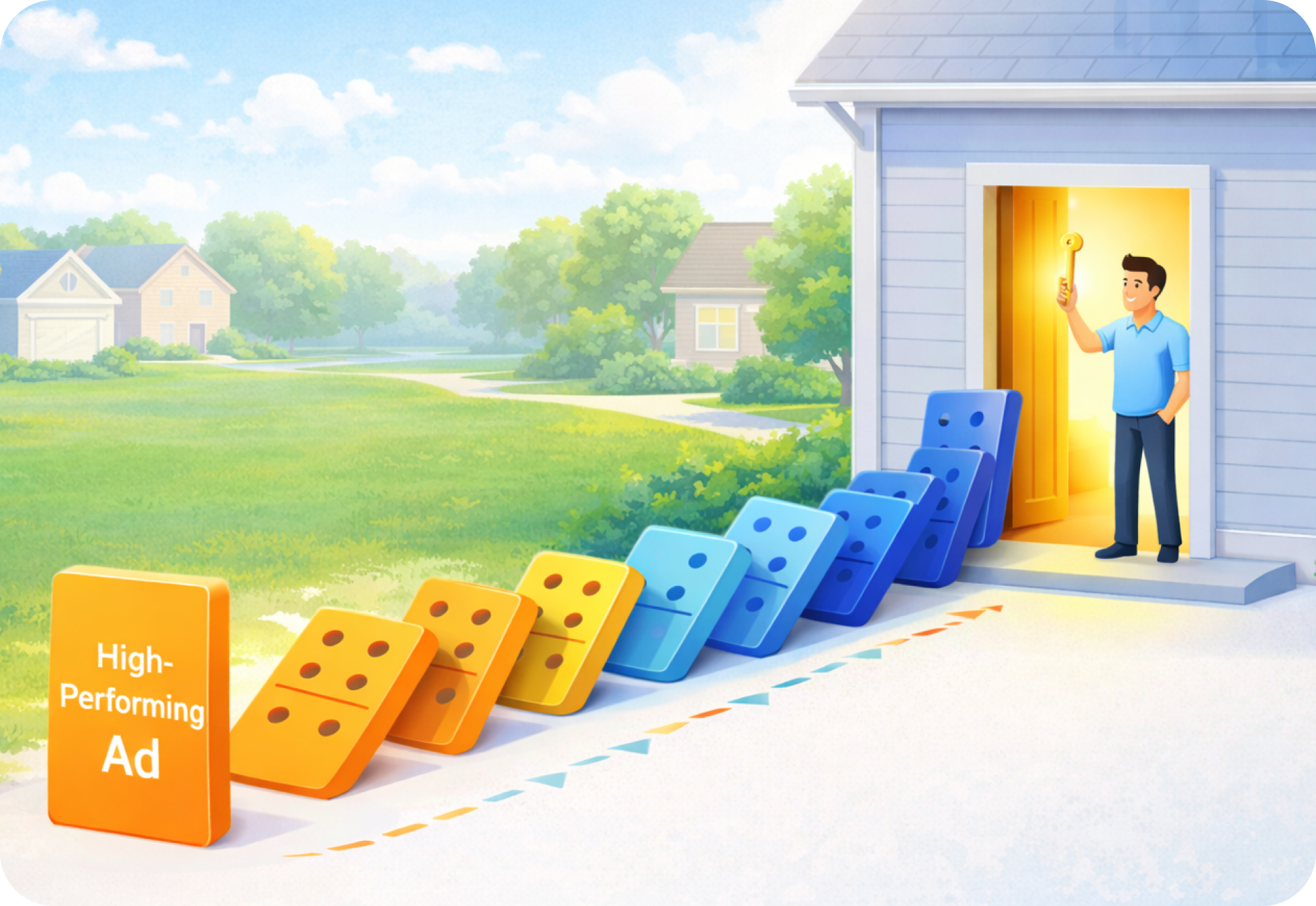
For multifamily marketers, creating ads is easy. Creating ads that successfully convert is not.
Prospects are exposed to countless ads every day, from apartment listings and social media promotions to search results and display banners. Standing out requires more than just visibility, It requires intention, creativity, and a clear understanding of what motivates renters to take action.
As multifamily marketers shift focus from generating attention to driving conversions, ad creative plays a critical role in performance. The right combination of messaging, visuals, and user experience can be the difference between a scroll and a tour booking.
So what separates high-performing ads from the rest? It starts with designing creative content that connects, communicates, and converts.
Start With the Goal, Not the Design
One of the most common mistakes in ad creation is focusing on visuals before defining the objective.
Every ad should be built around a clear goal. Are you trying to: Drive traffic to your website? Increase tour bookings? Promote limited-time offers? Fill specific unit types?
The answer should shape everything from messaging to format to call-to-action.
For example, an awareness-focused ad might highlight lifestyle imagery and broad messaging, while a conversion-focused ad should include urgency, clear next steps, and direct value propositions.
When creative aligns with the campaign goal, performance becomes more intentional and more measurable.
Lead With What Renters Actually Care About
Amenities and features are important, but they don’t always drive action on their own.
High-converting ads focus on the outcomes those features enable. Instead of listing what a property has, they highlight what life looks like for the renter.
Compare these two approaches: “Luxury apartments with a fitness center and pool”, versus “Start your mornings with a workout and unwind poolside after work”
The second creates a mental picture. It connects emotionally. And that connection is often what drives engagement.
Understanding renter priorities - convenience, lifestyle, location, flexibility, allows marketers to craft messaging that resonates more deeply.
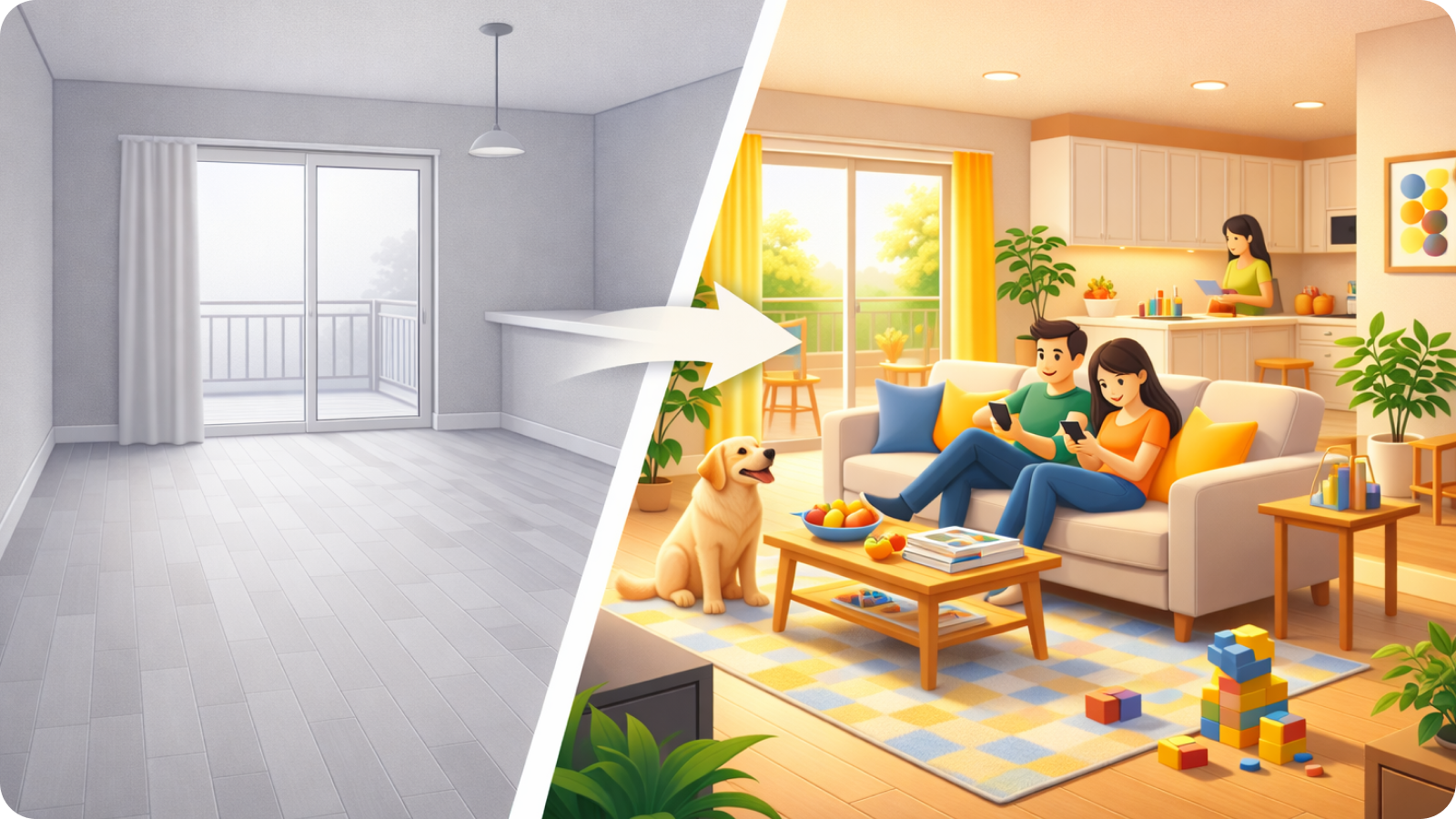
Use Visuals That Stop the Scroll
In digital advertising, visuals are often the first (and sometimes only) chance to capture attention.
Strong multifamily ad creative uses visuals that are:
- Bright, clear, and professionally produced
- Representative of real spaces and experiences
- Focused on lifestyle, not just layouts
- Optimized for mobile viewing
While unit interiors are important, lifestyle imagery often performs better in early engagement stages. Showing real moments, such as working from home, relaxing in shared spaces, enjoying nearby attractions helps prospects envision themselves in the community.
Short-form video is also becoming increasingly effective. Quick walkthroughs, amenity highlights, and day-in-the-life clips can communicate more than static images alone.
Keep Messaging Simple and Clear
In most cases, you have only a few seconds to capture attention and communicate value.
That’s why clarity matters. High-performing ads typically:
- Use concise, easy-to-read headlines
- Highlight one primary message or benefit
- Avoid overcrowding with too much text
- Include a clear and direct call-to-action
Overcomplicating ad copy can dilute its impact. Instead of trying to say everything, focus on what matters most to your target audience in that moment.
Whether it’s “Schedule a Tour,” “View Availability,” or “Apply Now,” your call-to-action should be impossible to miss.
Create a Sense of Urgency
Conversion-focused ads often include an element of urgency that encourages prospects to act sooner rather than later.
This can take several forms:
- Limited-time leasing specials
- Availability alerts (“Only a few units left”)
- Seasonal messaging tied to moving timelines
- Deadlines for promotions or incentives
Urgency works because it reduces hesitation. When prospects feel they might miss out, they are more likely to take the next step.
However, it’s important that urgency remains authentic. Misleading or overused urgency tactics can reduce trust and hurt long-term performance.
Align Ads With Landing Experiences
Even the best ad creative can fall short if the landing experience doesn’t match. When a prospect clicks an ad, they expect a seamless transition. If the messaging, visuals, or offer changes drastically on the landing page, it can create confusion and reduce conversion rates.
To maintain consistency:
- Match headlines and imagery between ads and landing pages
- Ensure the call-to-action remains clear and accessible
- Reduce friction in forms and navigation
- Optimize pages for mobile performance
Think of the ad and landing page as part of the same experience, not separate elements.
Test, Learn, and Optimize
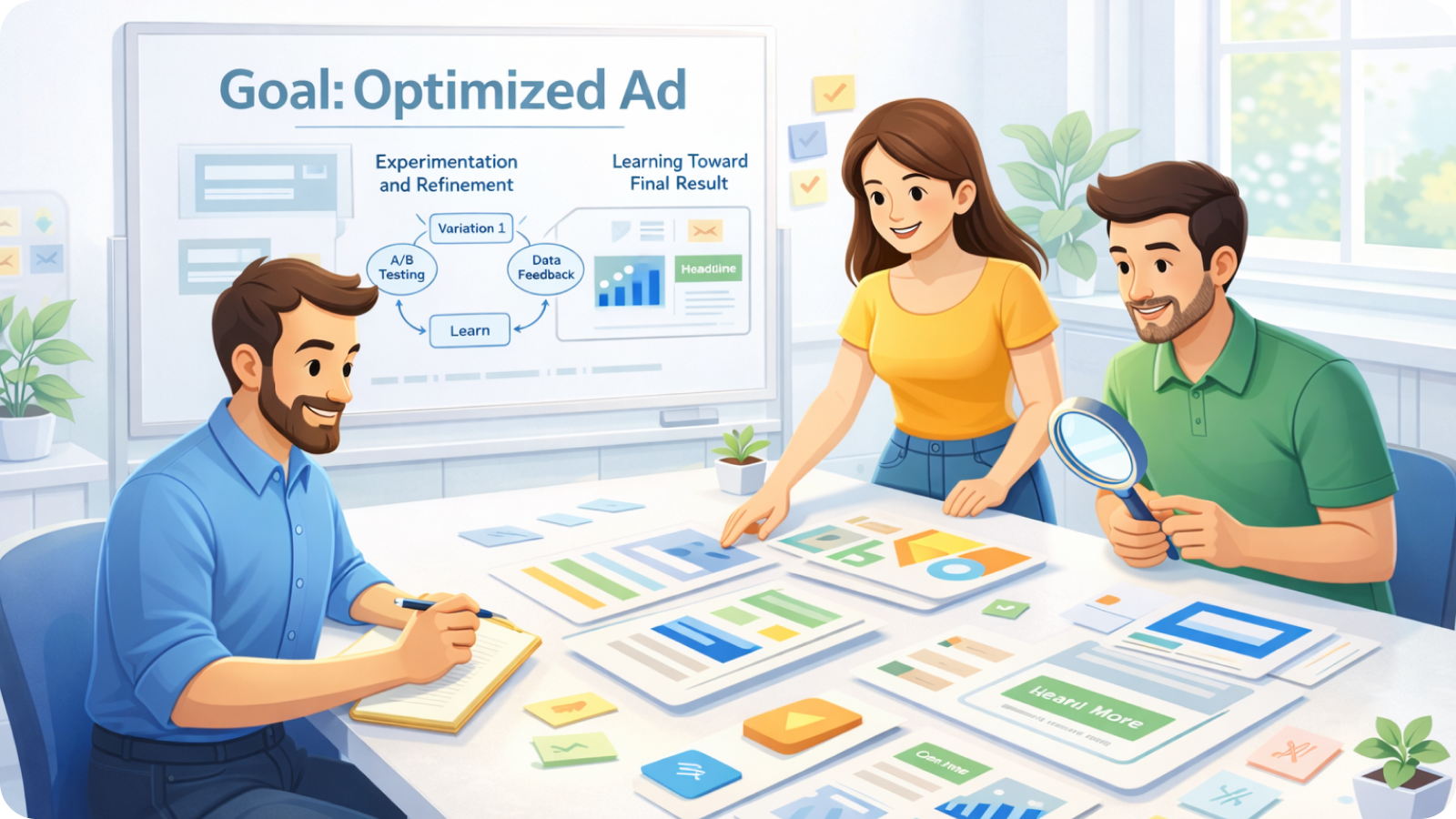
There is no single “perfect” ad. What works for one audience, property, or market may not work for another. That’s why testing is essential.
Multifamily marketers should regularly experiment with:
- Different headlines and messaging angles
- Image vs. video formats
- Lifestyle vs. unit-focused visuals
- Various calls-to-action
- Audience targeting segments
Even small changes can lead to meaningful improvements in performance.
By analyzing results and iterating over time, teams can refine their creative approach and continuously improve conversion rates.
Balance Creativity With Data
Creativity is what captures attention, but data is what sustains performance.
Metrics like click-through rate, conversion rate, and cost per lease provide valuable insight into how ads are performing. These insights help marketers understand which creative elements resonate most with their audience.
When creative decisions are guided by data, campaigns become more efficient and effective.
The goal isn’t to remove creativity from the process, but to enhance it with real-world feedback.
Designing Ads That Drive Real Results
At its core, high-performing multifamily advertising is about connection.
It’s about understanding your audience, telling a compelling story, and making it easy for prospects to take the next step.
When ads are designed with clear goals, strong visuals, simple messaging, and a seamless user experience, they do more than generate clicks - they drive meaningful action.
As multifamily marketing continues to evolve, the brands that prioritize both creativity and conversion will be the ones that stand out.
Because in a crowded digital landscape, it’s not just about being seen. It’s about being chosen.

More from Dyverse

Equality Now — A Message from Our CEO
Dyverse stands behind recent protests and outcry for REAL change in the United States. As a company, and as individuals we are committed to...
Educate and Inform: How Content Marketing Can Benefit
The multifamily industry faces unique challenges marketing its properties and services to potential residents. Unlike traditional...
Why Settle for Good When Great Wins Tenants? The Multifamily Website Difference
In the multifamily housing market, a website is more than just a digital presence; it's a pivotal element in attracting and retaining...
Want more?
Subscribe to get the latest updates on multifamily marketing, technology, and more.

Keep up with us!
For the latest updates be sure to connect with us on our social platforms.


Let's start a conversation
Schedule a demo to discuss how Dyverse can help you boost your leasing performance.


Suite 1000
Orlando, FL 32801
(866) 832-1507


